-
Shop
- Adidas
- Advanced Technologies
- Apple Accessories
- Armani Fashion
- Arts, Crafts & Hobbies
- Beauty & Skincare
- Best-Sellers
- Calvin Klein Fashion
- Car Accessories
- Dating & Social Skills
- Drones
- Education & Learning
- Electronics
- Emotional Intelligence
- Family & Parenting
- Fashion
- Alexander McQueen Fashion
- Bags
- Bags & Wallets
- Balenciaga Fashion
- Belts
- Blazers
- Blouses & Shirts
- Bottega Veneta Fashion
- Bottoms
- Brunello Cucinelli Fashion
- Burberry Fashion
- Chanel Fashion
- Chloé Fashion
- Dior Fashion
- Dolce & Gabbana Fashion
- Dresses
- Etro Fashion
- Fendi Fashion
- Gucci Fashion
- Hats & Hair Accessories
- Hoodies & Sweatshirts
- Jacquemus Fashion
- Jewelry
- Jil Sander Fashion
- Jimmy Choo Fashion
- Kiton Fashion
- Luggage
- Luggage Bags
- Men's Fashion
- Miu Miu Fashion
- Off-White Fashion
- Outerwear
- Prada Fashion
- Rick Owens Fashion
- Saint Laurent Fashion
- Scarves
- Shoes
- Skirts
- Socks & Tights
- Sunglasses
- Sweaters & Cardigans
- The Row Fashion
- Tom Ford Fashion
- Tops & Shirts
- Trousers
- Valentino fashion
- Valentino Garavani Fashion
- Versace Fashion
- Vivienne Westwood fashion
- Watches
- Fashion Accessories
- Finance & Career
- Fitness & Movement
- Gadgets
- Gift Ideas
- Gifts
- Guess Fashion
- Health & Beauty
- Health & Wellness
- Home & Garden
- Home & Lifestyle
- Home Supplies
- Hormone & Women’s Health
- Kids & Babies
- Massagers
- Mindset
- Mindset & Personal Growth
- Nike Fashion
- Nutrition & Healthy Eating
- Patio, Lawn & Garden
- Personal Growth
- Pet Care
- Pet Supplies
- Pets
- Productivity
- Relationships & Social Confidence
- Samsung Accessories
- Self-Care & Mental Well-Being
- Sleep & Rest
- Sport
- Sport & Outdoors
- Style & Fashion
- Summer 2025 Fashion Collection
- Super Deals
- Tesla Accessories
- Tommy Hilfiger Fashion
- Travel
- Travel & Outdoors
- Video Games
- Wealth
Manual Dumpling Wrapper & Noodle Machine: Even Sheets Fast
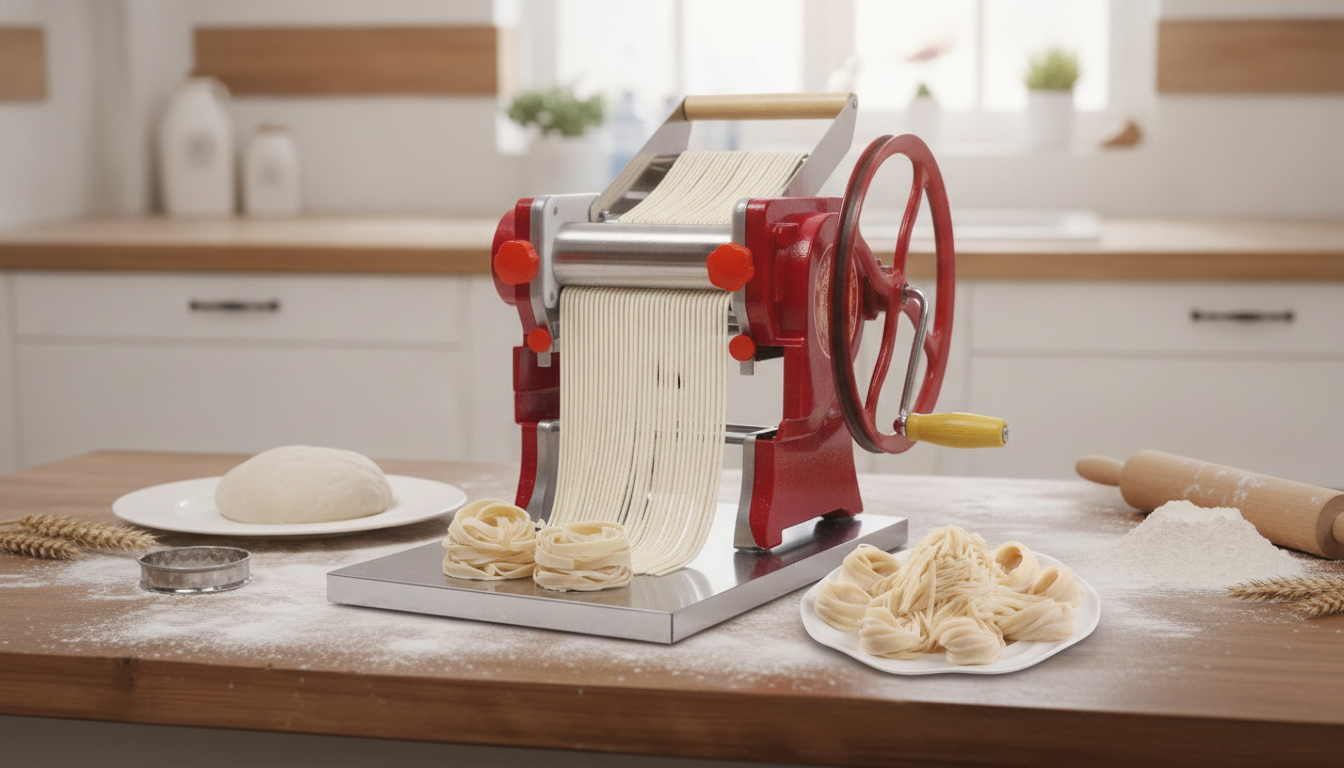
Household Manual Noodles and Dumpling-Skin Machine: Fresh Sheets, Faster Prep, No Electricity
A manual noodles and dumpling-skin machine is a simple upgrade that makes dough work more predictable. Instead of fighting uneven rolling pins and sticky edges, you get repeatable thickness, smoother sheets, and a steady rhythm for dumplings, wontons, and sheet-based noodle styles. Because it’s hand-cranked, it’s also easy to use anywhere—no outlet required—while still giving you precise control over how quickly (and gently) the dough is compressed.
If you want a reliable way to produce uniform dumpling wrappers for better sealing and consistent cooking, a countertop sheeter is one of the most practical tools to add to a home kitchen.
What This Machine Helps With
- Turns rested dough into even sheets for dumpling wrappers, wonton skins, and hand-cut style noodles.
- Reduces rolling time and helps keep thickness consistent from edge to edge.
- Works well for small-batch home cooking and higher-throughput prep when used continuously with a steady dough workflow.
- Ideal for dumplings, potstickers, bao-style wrappers (thin sheet), and fresh noodle styles that start from a sheet.
For many cooks, the biggest improvement is consistency: once your sheet thickness is steady, filling portions, sealing, and cooking times become easier to standardize across a whole batch.
Key Parts and What They Do
- Rollers: Compress dough into a smooth sheet; repeated passes improve elasticity and uniformity.
- Thickness adjustment: Controls sheet thickness; gradual reduction helps prevent tearing.
- Crank handle: Provides manual power and pace control—useful for delicate or drier dough.
- Clamp or base mount: Stabilizes the machine on a countertop to keep feeding smooth and safer.
- Guide/feeder area: Helps align dough so sheets come out straight and even.
Household vs. Commercial-Style Use: What to Expect
Manual operation prioritizes control and reliability, but output depends on your workflow. When the dough is properly mixed and rested, the machine can run continuously: portion, sheet, stack, then cut and fill. For dumpling wrappers, the machine shines by producing a uniform sheet that you can quickly punch into rounds. For noodles, it creates an even slab that can be sliced into strips (with an attachment if available, or by hand with a knife).
For best results, work in stages: mix and rest the dough, sheet it down in steps, then cut/portion in an assembly line. That “batching” approach reduces sticking and keeps the roller passes smooth.
Dough Basics for Smooth Sheeting
- Hydration matters: Overly wet dough sticks and smears; overly dry dough cracks and tears.
- Resting is essential: Let dough relax after mixing to reduce shrinkage during rolling.
- Light flouring: Dust lightly to prevent sticking; excess flour can create dry seams and rough sheets.
- Portion size: Smaller pieces feed more evenly and reduce stress on the rollers.
- For dumpling skins: Aim for pliable, smooth dough that doesn’t cling to fingers.
Food safety basics still apply with fresh dough: keep work surfaces clean, wash hands often, and avoid cross-contamination from raw ingredients (see USDA food safety guidance).
Step-by-Step: Making Dumpling Skins
- Mix dough until cohesive, then rest (covered) so gluten relaxes.
- Flatten a portion into a small rectangle/oval to start the first pass.
- Begin at a thicker setting, pass dough through, fold, and pass again to build smoothness.
- Reduce thickness one setting at a time until the sheet matches the wrapper style you want.
- Cut rounds with a cutter; stack with light dusting and keep covered to prevent drying.
Keeping skins covered is the difference between wrappers that pleat neatly and wrappers that crack at the rim. Work in small stacks so edges stay pliable while you fill.
Step-by-Step: Making Fresh Noodles from a Sheet
- Sheet the dough gradually to your target thickness; keep the surface lightly dusted.
- For hand-cut noodles: fold the sheet loosely, then slice with a sharp knife to your preferred width.
- Separate strands with a dusting of flour or starch to prevent clumping.
- Cook in abundant boiling water; fresh noodles cook fast—start testing early for texture.
Thickness Guide and Use Cases
| Use | Sheet feel | Common outcome | Handling tip |
|---|---|---|---|
| Wonton / thin wrappers | Very supple, translucent edges | Light, delicate bite | Keep covered; dries quickly |
| Dumpling wrappers | Smooth, elastic, easy to lift | Balanced chew and strength | Light dusting prevents sticking |
| Noodle sheet (to cut) | Firm but flexible | Even-width noodles | Rest sheet 5–10 min before cutting |
| Pan-fry dumplings / thicker skins | More robust, less translucent | Lower tear risk during frying | Avoid over-flouring seams |
Cleaning and Care
If you’re ever unsure about a material that contacts food, the FDA overview on food-contact substances is a helpful reference point.
Safety and Countertop Setup
Troubleshooting Common Problems
Recommended Products (In Stock)
For consistent sheeting and hands-on control, see the Household Manual Noodles Machine Commercial Dumpling Skin Maker. When you’re ready to buy, Check current price and availability.
When This Tool Is the Right Choice
FAQ
Can it make dumpling skins and noodles with the same dough?
Yes. Many basic flour-and-water doughs can be sheeted for wrappers and also cut into noodles; you may tweak hydration slightly and rest time depending on whether you want thin, tender skins or firmer noodle texture.
How do dumpling skins stay from drying out while working?
Stack the skins with a light dusting of flour or starch and keep them covered with a towel or plastic wrap. Work in smaller batches so the outer edges don’t dry and crack before filling.
What should be avoided when cleaning the rollers?
Avoid soaking or running water directly over the rollers unless the manufacturer explicitly says it’s safe. Dry-clean by brushing off flour and dried dough, then wipe the exterior and dry it completely.
Recommended for you

Was this article helpful?
Yes
No








Leave a comment