-
Shop
- Adidas
- Advanced Technologies
- Apple Accessories
- Armani Fashion
- Arts, Crafts & Hobbies
- Beauty & Skincare
- Best-Sellers
- Calvin Klein Fashion
- Car Accessories
- Dating & Social Skills
- Drones
- Education & Learning
- Electronics
- Emotional Intelligence
- Family & Parenting
- Fashion
- Alexander McQueen Fashion
- Bags
- Bags & Wallets
- Balenciaga Fashion
- Belts
- Blazers
- Blouses & Shirts
- Bottega Veneta Fashion
- Bottoms
- Brunello Cucinelli Fashion
- Burberry Fashion
- Chanel Fashion
- Chloé Fashion
- Dior Fashion
- Dolce & Gabbana Fashion
- Dresses
- Etro Fashion
- Fendi Fashion
- Gucci Fashion
- Hats & Hair Accessories
- Hoodies & Sweatshirts
- Jacquemus Fashion
- Jewelry
- Jil Sander Fashion
- Jimmy Choo Fashion
- Kiton Fashion
- Luggage
- Luggage Bags
- Men's Fashion
- Miu Miu Fashion
- Off-White Fashion
- Outerwear
- Prada Fashion
- Rick Owens Fashion
- Saint Laurent Fashion
- Scarves
- Shoes
- Skirts
- Socks & Tights
- Sunglasses
- Sweaters & Cardigans
- The Row Fashion
- Tom Ford Fashion
- Tops & Shirts
- Trousers
- Valentino fashion
- Valentino Garavani Fashion
- Versace Fashion
- Vivienne Westwood fashion
- Watches
- Fashion Accessories
- Finance & Career
- Fitness & Movement
- Gadgets
- Gift Ideas
- Gifts
- Guess Fashion
- Health & Beauty
- Health & Wellness
- Home & Garden
- Home & Lifestyle
- Home Supplies
- Hormone & Women’s Health
- Kids & Babies
- Massagers
- Mindset
- Mindset & Personal Growth
- Nike Fashion
- Nutrition & Healthy Eating
- Patio, Lawn & Garden
- Personal Growth
- Pet Care
- Pet Supplies
- Pets
- Productivity
- Relationships & Social Confidence
- Samsung Accessories
- Self-Care & Mental Well-Being
- Sleep & Rest
- Sport
- Sport & Outdoors
- Style & Fashion
- Summer 2025 Fashion Collection
- Super Deals
- Tesla Accessories
- Tommy Hilfiger Fashion
- Travel
- Travel & Outdoors
- Video Games
- Wealth
Cactus Tall Cat Tree: Stable Tower for Big Cats
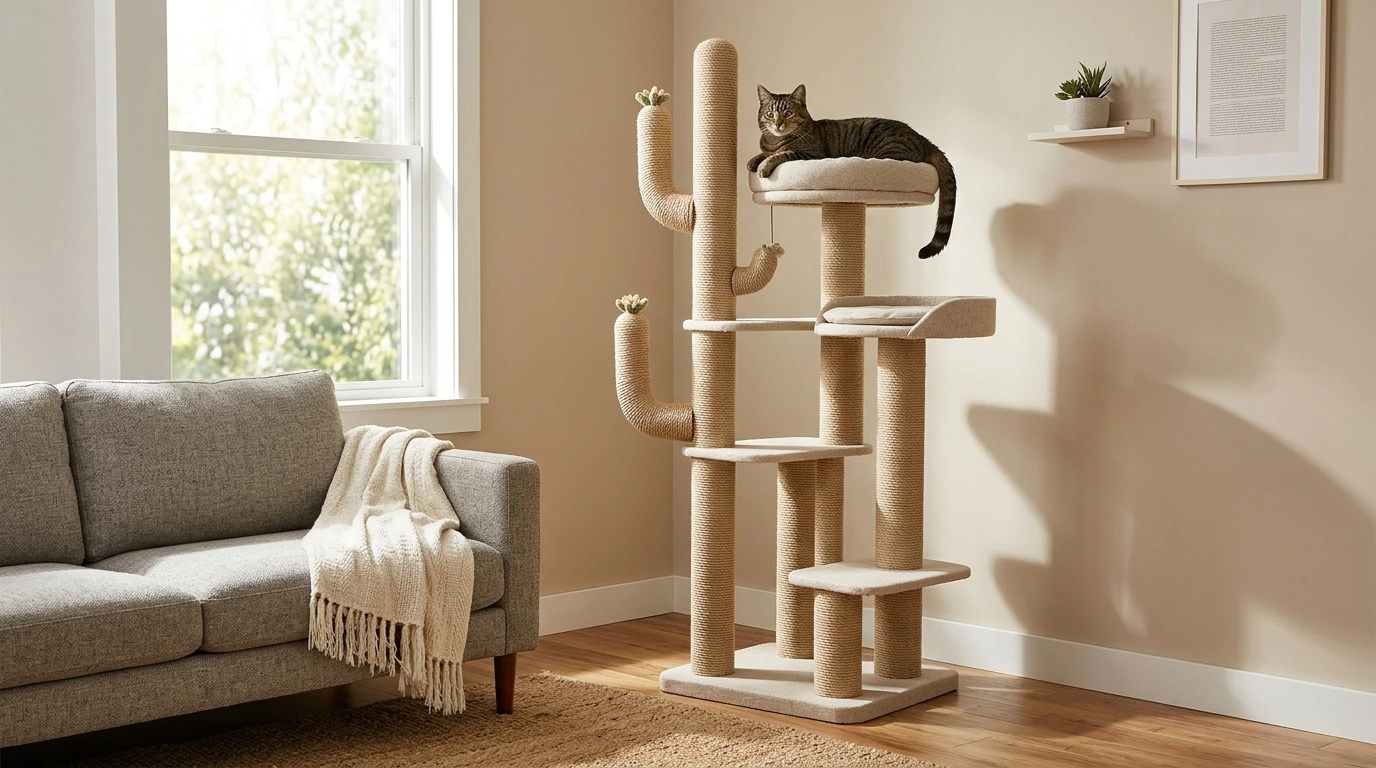
Cactus Tall Cat Tree for Cats: A Space-Saving Climb-and-Lounge Tower for Bigger Cats
A tall cat tree with a cactus silhouette adds vertical territory without taking over the room. For cats that like to climb, perch, and scratch—especially heavier or longer-bodied cats—a stable, multi-level design can reduce boredom and help protect furniture by giving them a dedicated place to stretch, observe, and nap. For more guidance, see Cat Tree Tower for Large Cats Adult – 60 Inch XXL Sturdy ….
What a cactus-style tall cat tree adds to a home
A cactus-inspired tower does more than look cute in a corner. It consolidates the “cat stuff” into one footprint while still supporting everyday feline routines. For further reading, see Climb to New Heights with this Stylish Cat Cactus Tree ….
- Vertical territory that supports natural climbing and perching instincts.
- A playful cactus look that fits modern, boho, or minimalist spaces while staying practical.
- Multiple activity zones (resting, scratching, lookout spots) stacked in one tower.
- Scratch-friendly surfaces that help redirect clawing away from sofas and rugs.
- More movement through safe jumping and climbing, which can support healthy weight and mobility.
Behavior experts consistently emphasize that cats thrive when their environment includes opportunities to climb, perch, and feel secure in elevated spaces. The American Association of Feline Practitioners outlines these needs in its Feline Environmental Needs Guidelines.
Who benefits most from a taller cat tree
Not every cat uses height the same way, but tall towers tend to shine in homes where cats want more “up” than “out.”
- Large cats that need bigger platforms and a sturdier base to feel secure.
- Multi-cat households where vertical spacing reduces crowding and competition.
- Indoor cats that need enrichment, climbing, and window-adjacent perches.
- Timid or anxious cats that relax more easily with an elevated retreat.
- Small-space owners who want to build upward rather than fill the floor with separate loungers and scratchers.
Key features to look for (especially for larger cats)
A tall cat tree is only as good as its stability. Bigger cats put more force into every jump, turn, and stretch—so a few design details matter more than the décor theme.
- Stability: Look for a wide, heavy base and well-anchored posts to reduce wobble during leaps.
- Platform size: Larger cats need roomy perches so they can turn around, loaf, and sprawl without hanging off the edge.
- Scratch surfaces: Durable sisal-wrapped posts (or replaceable scratch areas) help the tower stay useful longer.
- Smarter level spacing: Staggered platforms create a natural “stair-step” route that reduces risky, overconfident jumping.
- Materials and finish: Easy-to-clean fabric, solid fasteners, and tidy seams hold up to daily climbing and kneading.
- Ceiling-height fit: Confirm total height works with the room and won’t interfere with doors, vents, or ceiling fans.
For scratching specifically, the ASPCA’s guidance on scratching behavior in cats reinforces an important point: scratching is normal and necessary. The goal is to offer a better “yes” option than the couch.
Quick overview: Cactus Tall Cat Tree for Large Cats
If the priority is a tall, space-saving tower that still feels steady under a bigger cat, a cactus-style design can deliver both form and function. This option is built to add vertical play and rest space, and it’s especially useful near a window where cats can rotate between lookout duty and nap time.
At-a-glance details
| Item | Details |
|---|---|
| Product | Cactus Tall Cat Tree for Large Cats |
| Price | $159.95 USD |
| Availability | In stock |
| Best for | Large cats, indoor enrichment, multi-level lounging |
| Tip | Pairs well with a separate floor scratcher if a cat prefers horizontal scratching |
Placement tips for safer climbing and better daily use
Where the tower goes often determines whether it becomes a daily hangout or a rarely used piece of furniture. Aim for stability, confidence, and convenience.
- Start with a flat, non-slippery surface. On tile or hardwood, add a grippy mat underneath to reduce sliding.
- Choose a window-adjacent spot. Natural light and outdoor views can make the top perch the most-used seat in the house—just keep it away from direct heat sources and dangling blind cords.
- Leave a buffer zone. Keep a little distance from shelves and fragile décor to avoid mid-jump collisions.
- Consider wall anchoring for very tall towers. Extra security can matter for athletic cats and multi-cat play sessions.
- Create an easy “route” only if needed. For senior or very heavy cats, a nearby ottoman or low shelf can serve as a step-up (without turning the whole area into a chaotic launchpad).
Getting a cat to use it (without a battle)
Care, cleaning, and longevity
More in-stock picks
- Cactus Tall Cat Tree for Large Cats (a vertical climb-and-lounge tower designed with bigger cats in mind)
- Women’s Beige Faux Fur Jacket (a warm layer for humans when the cat claims the best window seat)
FAQ
Is a tall cat tree safe for large cats?
Yes, as long as it has a wide, stable base, sturdy posts, and platforms that are large enough for comfortable turning and lounging. Place it on a flat surface, tighten hardware regularly, and consider wall anchoring if the tower is especially tall or your cat is an energetic jumper.
Where should a tall cat tree be placed in a small room?
A corner near a window is often the most practical choice because it saves floor space and gives your cat a natural lookout. Keep it away from doors, fragile items, and high-traffic walkways so your cat can climb and rest without being startled.
How do you get a cat to use a new cat tree?
Use treats, a small amount of catnip, and a familiar blanket to make the tree inviting. Reward curiosity and scratching on the post, and introduce higher perches gradually—especially for cautious cats.
Recommended for you
Was this article helpful?
Yes
No







Leave a comment