-
Shop
- Adidas
- Advanced Technologies
- Apple Accessories
- Armani Fashion
- Arts, Crafts & Hobbies
- Beauty & Skincare
- Best-Sellers
- Calvin Klein Fashion
- Car Accessories
- Dating & Social Skills
- Drones
- Education & Learning
- Electronics
- Emotional Intelligence
- Family & Parenting
- Fashion
- Alexander McQueen Fashion
- Bags
- Bags & Wallets
- Balenciaga Fashion
- Belts
- Blazers
- Blouses & Shirts
- Bottega Veneta Fashion
- Bottoms
- Brunello Cucinelli Fashion
- Burberry Fashion
- Chanel Fashion
- Chloé Fashion
- Dior Fashion
- Dolce & Gabbana Fashion
- Dresses
- Etro Fashion
- Fendi Fashion
- Gucci Fashion
- Hats & Hair Accessories
- Hoodies & Sweatshirts
- Jacquemus Fashion
- Jewelry
- Jil Sander Fashion
- Jimmy Choo Fashion
- Kiton Fashion
- Luggage
- Luggage Bags
- Men's Fashion
- Miu Miu Fashion
- Off-White Fashion
- Outerwear
- Prada Fashion
- Rick Owens Fashion
- Saint Laurent Fashion
- Scarves
- Shoes
- Skirts
- Socks & Tights
- Sunglasses
- Sweaters & Cardigans
- The Row Fashion
- Tom Ford Fashion
- Tops & Shirts
- Trousers
- Valentino fashion
- Valentino Garavani Fashion
- Versace Fashion
- Vivienne Westwood fashion
- Watches
- Fashion Accessories
- Finance & Career
- Fitness & Movement
- Gadgets
- Gift Ideas
- Gifts
- Guess Fashion
- Health & Beauty
- Health & Wellness
- Home & Garden
- Home & Lifestyle
- Home Supplies
- Hormone & Women’s Health
- Kids & Babies
- Massagers
- Mindset
- Mindset & Personal Growth
- Nike Fashion
- Nutrition & Healthy Eating
- Patio, Lawn & Garden
- Personal Growth
- Pet Care
- Pet Supplies
- Pets
- Productivity
- Relationships & Social Confidence
- Samsung Accessories
- Self-Care & Mental Well-Being
- Sleep & Rest
- Sport
- Sport & Outdoors
- Style & Fashion
- Summer 2025 Fashion Collection
- Super Deals
- Tesla Accessories
- Tommy Hilfiger Fashion
- Travel
- Travel & Outdoors
- Video Games
- Wealth
5-in-1 Wooden Pikler Triangle Set: Safe Toddler Play
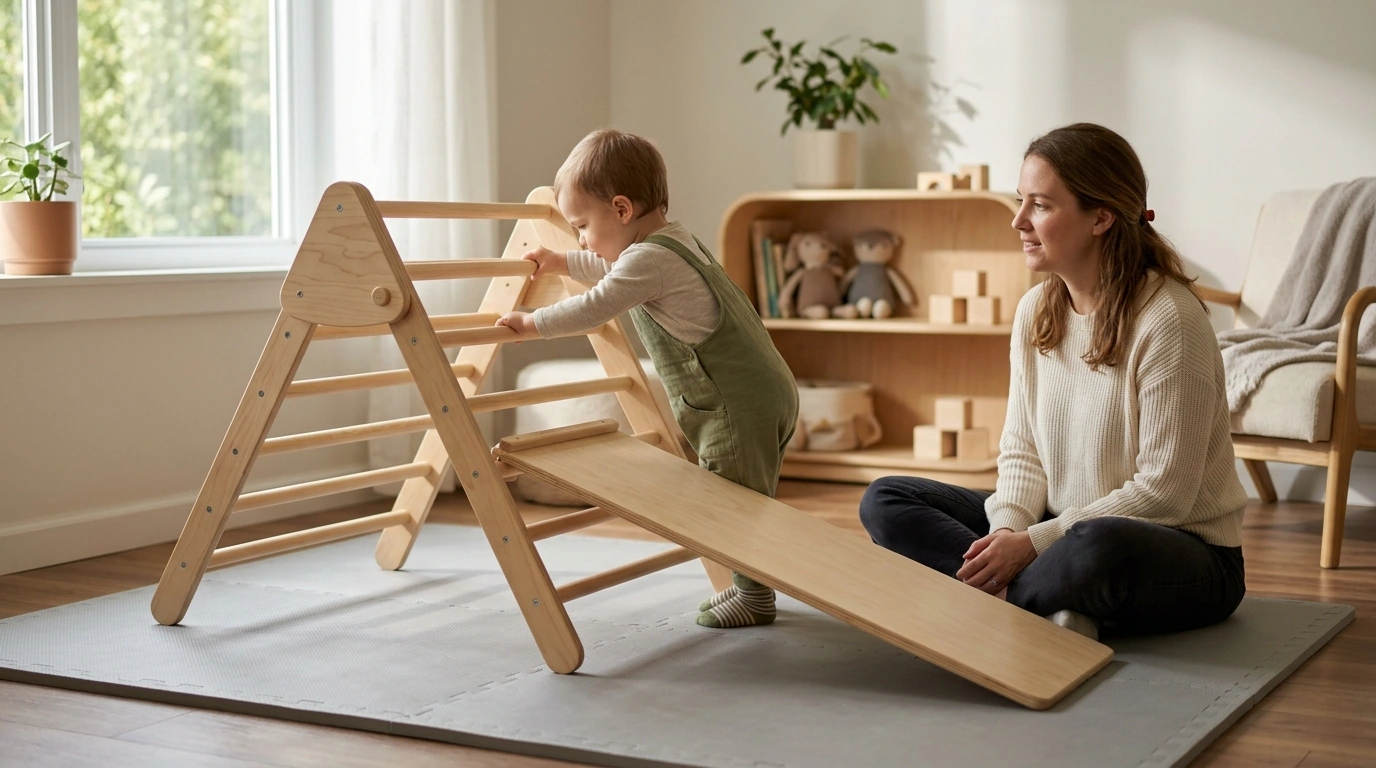
5-in-1 Wooden Pikler Triangle Climbing Set for Toddlers: Safe Indoor Climbing and Play Ideas
A wooden Pikler-style climbing set can turn everyday indoor time into active, confidence-building play—without batteries, screens, or a pile of extra toys. A well-made 5-in-1 set supports climbing, crawling, balancing, and gentle sliding in a way that feels “new” simply by changing the setup. Below is a practical guide to what a 5-in-1 climbing set offers, how to use it safely at different stages, how much room it needs, and simple play ideas that keep toddlers moving while staying calm and structured.
What a 5-in-1 climbing set includes
A 5-in-1 wooden climbing set typically centers on a Pikler-style triangle frame—an angled, rung-style structure toddlers can grasp as they pull up, climb, and practice controlled descending. Most sets also include a versatile ramp/board that can be repositioned for multiple uses.
- Pikler-style triangle frame: Designed for climbing up and down with hands and feet engaged, helping toddlers learn “where their body is” in space.
- Convertible ramp/board: Can act as an incline ramp, a gentle slide, or a bridge between elements for crawling and balancing.
- Multi-use configurations: One set can support climbing, crawling, balancing, and careful sliding—ideal for gross motor play indoors.
- Indoor-friendly wood construction: Fits naturally into living rooms, playrooms, or bedrooms, and looks more like furniture than a loud toy.
- Open-ended play: The same pieces grow with your child—difficulty changes with angles and layout rather than “levels” or presets.
Why toddlers benefit from indoor climbing
Toddlers learn best through movement and repetition. Indoor climbing (done safely and at a child’s pace) helps build strength and coordination while also supporting attention and confidence.
- Gross motor development: Climbing naturally trains core strength, shoulder stability, grip strength, and leg coordination.
- Balance and body awareness: Repeated steps up and down improve stability, foot placement, and controlled shifting of weight.
- Problem-solving: Toddlers experiment with routes—up, down, and across—building early planning skills.
- Independent play: Low-tech challenges encourage practice without needing constant new entertainment.
- Indoor energy outlet: On bad-weather days, movement play can help reduce restlessness and improve mood.
For broader context on play’s role in healthy development, the American Academy of Pediatrics highlights play as essential for building cognitive, physical, social, and emotional well-being (AAP: The Importance of Play).
Safety essentials: setup, supervision, and room layout
Indoor climbing is safest when the environment does more of the “work” than constant verbal reminders. Start with a predictable setup, clear boundaries, and consistent supervision—especially for new climbers.
Quick safety checklist
| Item | What to check | How often |
|---|---|---|
| Flooring | Non-slip base; add cushioning mat | Every setup |
| Clearance | Open area around set; remove hazards | Every session |
| Stability | No wobble; secure configuration before play | Every setup |
| Hardware | Tight screws/bolts; no loose parts | Weekly |
| Surface | Smooth wood; no splinters or sharp edges | Weekly |
| Use habits | Feet-first down; no pushing or crowding | Each session |
For additional toy safety guidance and age-appropriate use, see the U.S. Consumer Product Safety Commission’s recommendations (CPSC Toy Safety).
Choosing the right configuration by age and stage
- Early toddlers: Keep the triangle at a gentle angle and offer a hand at the start. Short sessions (5–10 minutes) often work better than long ones.
- Confident climbers: Add the ramp as a low incline to practice stepping, gripping, and controlled climbing.
- Balance builders: Create a simple bridge and encourage slow, careful movement—crawling counts and is often safer than upright walking.
- High-energy days: Rotate the setup rather than stacking height. Novelty can come from changing the “route,” not increasing the risk.
- Keep expectations realistic: Milestones vary; the CDC’s developmental milestone resources can help you gauge general readiness while still following your child’s cues (CDC: Milestones by Two Years).
Play ideas that keep it fresh (without more toys)
Care, cleaning, and long-term use
Product spotlight: movement-friendly picks in stock
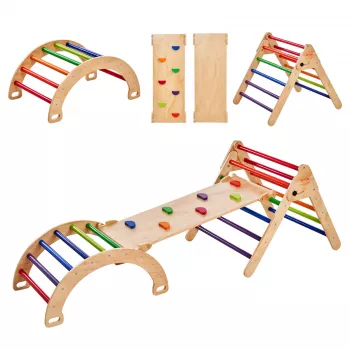
- 5-in-1 Wooden Pikler Triangle Climbing Set for Toddlers — a flexible, multi-setup option for climbing, ramp play, and balance-style challenges.
- Vans Women’s Pink Hooded Jacket — handy for quick outdoor breaks between indoor play sessions.
- Levi’s Women’s Blue Plain Jeans — an easy everyday staple for active, on-the-go parenting.
At-a-glance summary
| Detail | Value |
|---|---|
| Product | 5-in-1 Wooden Pikler Triangle Climbing Set for Toddlers |
| Price | 184.80 USD |
| Availability | In stock |
| Best use | Indoor climbing, ramp play, open-ended gross motor activity |
| Product page | View product |
FAQ
What age is a wooden Pikler triangle climbing set suitable for?
Many families start in the toddler years when a child can pull to stand and shows interest in climbing, often around 12 months and up with close supervision. Readiness depends on balance and coordination, so begin with low, simple setups and increase challenge gradually.
How much space is needed for a Pikler climbing set indoors?
Plan for the footprint of the frame plus open clearance on all sides so your toddler can climb and step down safely. In smaller rooms, keep the same footprint and rotate configurations (triangle-only one day, ramp-incline another) instead of expanding the setup.
How can a Pikler triangle be used safely at home?
Use it on a stable, non-slip surface with a cushioned mat, keep hazards and furniture edges away, and supervise toddlers closely—especially early on. Teach feet-first descending, discourage pushing or crowding, and do routine checks for tight hardware and smooth wood.
Recommended for you

Was this article helpful?
Yes
No







Leave a comment