-
Shop
- Adidas
- Advanced Technologies
- Apple Accessories
- Armani Fashion
- Arts, Crafts & Hobbies
- Beauty & Skincare
- Best-Sellers
- Calvin Klein Fashion
- Car Accessories
- Dating & Social Skills
- Drones
- Education & Learning
- Electronics
- Emotional Intelligence
- Family & Parenting
- Fashion
- Alexander McQueen Fashion
- Bags
- Bags & Wallets
- Balenciaga Fashion
- Belts
- Blazers
- Blouses & Shirts
- Bottega Veneta Fashion
- Bottoms
- Brunello Cucinelli Fashion
- Burberry Fashion
- Chanel Fashion
- Chloé Fashion
- Dior Fashion
- Dolce & Gabbana Fashion
- Dresses
- Etro Fashion
- Fendi Fashion
- Gucci Fashion
- Hats & Hair Accessories
- Hoodies & Sweatshirts
- Jacquemus Fashion
- Jewelry
- Jil Sander Fashion
- Jimmy Choo Fashion
- Kiton Fashion
- Luggage
- Luggage Bags
- Men's Fashion
- Miu Miu Fashion
- Off-White Fashion
- Outerwear
- Prada Fashion
- Rick Owens Fashion
- Saint Laurent Fashion
- Scarves
- Shoes
- Skirts
- Socks & Tights
- Sunglasses
- Sweaters & Cardigans
- The Row Fashion
- Tom Ford Fashion
- Tops & Shirts
- Trousers
- Valentino fashion
- Valentino Garavani Fashion
- Versace Fashion
- Vivienne Westwood fashion
- Watches
- Fashion Accessories
- Finance & Career
- Fitness & Movement
- Gadgets
- Gift Ideas
- Gifts
- Guess Fashion
- Health & Beauty
- Health & Wellness
- Home & Garden
- Home & Lifestyle
- Home Supplies
- Hormone & Women’s Health
- Kids & Babies
- Massagers
- Mindset
- Mindset & Personal Growth
- Nike Fashion
- Nutrition & Healthy Eating
- Patio, Lawn & Garden
- Personal Growth
- Pet Care
- Pet Supplies
- Pets
- Productivity
- Relationships & Social Confidence
- Samsung Accessories
- Self-Care & Mental Well-Being
- Sleep & Rest
- Sport
- Sport & Outdoors
- Style & Fashion
- Summer 2025 Fashion Collection
- Super Deals
- Tesla Accessories
- Tommy Hilfiger Fashion
- Travel
- Travel & Outdoors
- Video Games
- Wealth
Crochet Hook for Locs & Braids: Smooth Frizz Safely
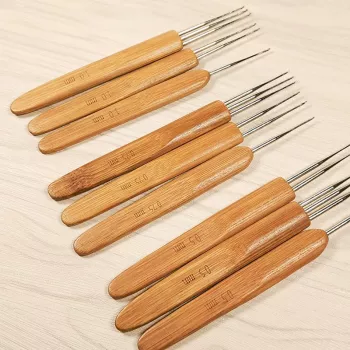
Creative Crochet Hook for Dreadlocks and Braids
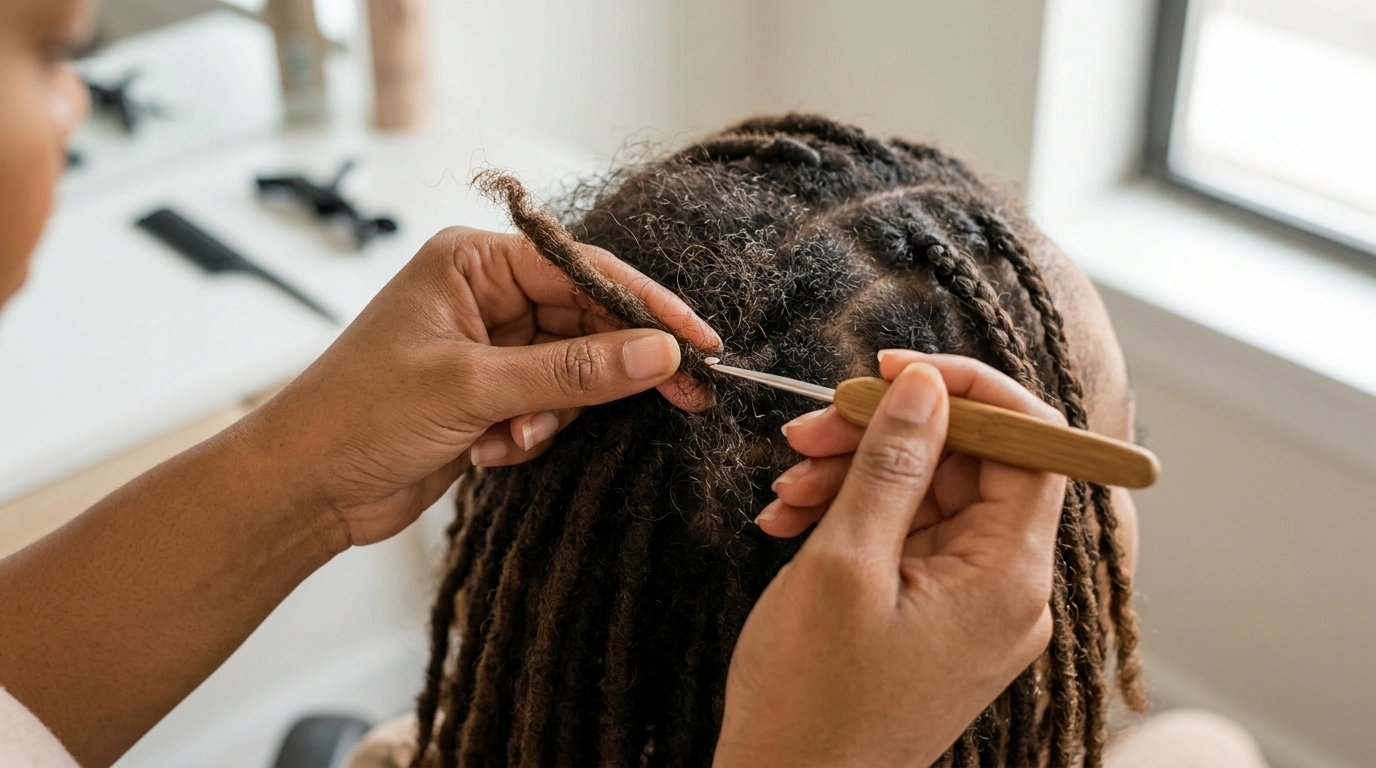
A crochet hook made for loc maintenance and braid finishing can help tidy frizz, pull in loose hairs, and refine sections without relying on heavy products. Used with a light hand, it’s a precise tool for detail work—especially around the crown, nape, and hairline where fuzz shows up first. Below is a practical guide to what the tool does, how to use it safely on different textures, and how to keep results neat while minimizing breakage.
What This Tool Is Used For
- Pulling stray hairs back into the body of a dreadlock to reduce fuzz and flyaways
- Tightening soft spots along the length of a loc for a more uniform look
- Assisting with forming or refining new locs when hair is sectioned properly
- Finishing braided styles by guiding loose ends inward for a cleaner appearance
- Detail work around the crown, nape, and hairline where frizz shows first
The goal is controlled refinement—not aggressive tightening. When a loc already has a solid foundation, a few careful passes can help it look more compact and polished without making it stiff or stressed.
Quick Specs and What They Mean in Practice
- A comfortable handle reduces hand fatigue during longer maintenance sessions
- A smooth, well-shaped hook helps glide through hair with fewer snags
- Smaller hooks tend to be better for compacting and detail work; larger hooks can move more hair per pass
- Durability matters because twisting motions can stress weaker metals over time
- A dedicated tool for hair should be kept separate from crafting tools to stay clean and smooth
At-a-glance checklist for a crochet hook used on locs and braids
| Feature | Why it matters | What to look for |
|---|---|---|
| Hook smoothness | Reduces snagging and breakage | No burrs; polished feel |
| Handle grip | Improves control and comfort | Non-slip, easy to hold |
| Hook size range | Matches hair density and section size | A size that fits through the loc without forcing |
| Build quality | Withstands repeated twisting | Sturdy hook/handle connection |
| Clean storage | Prevents buildup and contamination | Protective sleeve or pouch |
How to Use It on Dreadlocks (Step-by-Step)
- Start with clean, fully dry hair. Damp hair stretches more and can weaken under tension. Dry hair also gives better control and helps you feel resistance before you overdo it.
- Isolate one loc and anchor the base. Hold the loc firmly near the scalp with your fingers so the tool’s motion doesn’t translate into pulling on follicles.
- Insert the hook gently into the loc. Use small, controlled motions to catch stray hairs rather than pushing deeply or forcing the hook through tight areas.
- Pull captured hairs inward. After you catch a few strands, draw them into the center and make a slight rotation to encourage them to settle into the core.
- Work in short passes along the loc. Move down the length in small increments instead of repeatedly “stabbing” one spot. Concentrating too long in one area is where thinning can start.
- Stop once it looks compact and smooth. The moment the loc looks cleaner and more uniform, pause. Overworking can make sections feel hard while quietly creating weak points.
If you’re maintaining mature locs, less is usually more. A few minutes per loc can be plenty when your technique is consistent and your sections are well-supported.
How to Use It on Braids and Twist Styles
- Use it primarily for finishing and detailing: tucking loose ends, smoothing flyaways, and tightening select areas.
- For braided extensions, use lighter pressure and fewer passes to avoid snagging synthetic fibers.
- For natural-hair braids, guide loose hairs back into the braid path rather than tightening the entire braid from root to tip.
- If edges are delicate, keep the tool away from the hairline and refine with gentle finger smoothing instead.
- Practice on a small, hidden section first to confirm tension and technique before you commit to the front or crown.
For braid finishing, think “cleanup,” not “rebuild.” The best-looking results often come from minimal motion paired with neat sectioning and patience.
Keeping Hair Healthy While Maintaining Locs
For more on tension-related hair loss, see the American Academy of Dermatology Association’s guidance on hairstyles that pull and hair loss (AAD) and Cleveland Clinic’s overview of traction alopecia (Cleveland Clinic).
Common Mistakes and Easy Fixes
Product Options
For routine detailing, Creative Crochet Hook for Dreadlocks and Braids is an in-stock option designed for loc and braid refinement. Keep expectations realistic: the best results come from light tension, patience, and consistent technique rather than force.
If you like to protect freshly maintained styles from wind and friction on the way out the door, a hooded layer can help keep flyaways from returning too quickly. Two in-stock options to consider are the Vans Women’s Pink Hooded Jacket and the Women’s Beige Faux Fur Jacket.
FAQ
Can a crochet hook damage dreadlocks?
Yes—damage can happen if the hook is forced, used too frequently, or worked aggressively in one spot. Use small, controlled motions, support the base, and stop as soon as the loc looks smoother to reduce thinning and breakage.
Should hair be wet or dry when using a crochet hook on locs?
Fully dry hair is the safer choice because wet or damp hair stretches more and can weaken under tension. Clean, dry sections also help the hook glide with better control and fewer snags.
How often should locs be crocheted for maintenance?
A conservative schedule works best for most people—often every 4 to 8 weeks, with longer spacing for fine hair or sensitive scalps. If you notice soreness, bumps, or thinning, reduce frequency and tension and consider getting a professional assessment.
Recommended for you
Was this article helpful?
Yes
No






Leave a comment