-
Shop
- Adidas
- Advanced Technologies
- Apple Accessories
- Armani Fashion
- Arts, Crafts & Hobbies
- Beauty & Skincare
- Best-Sellers
- Calvin Klein Fashion
- Car Accessories
- Dating & Social Skills
- Drones
- Education & Learning
- Electronics
- Emotional Intelligence
- Family & Parenting
- Fashion
- Alexander McQueen Fashion
- Bags
- Bags & Wallets
- Balenciaga Fashion
- Belts
- Blazers
- Blouses & Shirts
- Bottega Veneta Fashion
- Bottoms
- Brunello Cucinelli Fashion
- Burberry Fashion
- Chanel Fashion
- Chloé Fashion
- Dior Fashion
- Dolce & Gabbana Fashion
- Dresses
- Etro Fashion
- Fendi Fashion
- Gucci Fashion
- Hats & Hair Accessories
- Hoodies & Sweatshirts
- Jacquemus Fashion
- Jewelry
- Jil Sander Fashion
- Jimmy Choo Fashion
- Kiton Fashion
- Luggage
- Luggage Bags
- Men's Fashion
- Miu Miu Fashion
- Off-White Fashion
- Outerwear
- Prada Fashion
- Rick Owens Fashion
- Saint Laurent Fashion
- Scarves
- Shoes
- Skirts
- Socks & Tights
- Sunglasses
- Sweaters & Cardigans
- The Row Fashion
- Tom Ford Fashion
- Tops & Shirts
- Trousers
- Valentino fashion
- Valentino Garavani Fashion
- Versace Fashion
- Vivienne Westwood fashion
- Watches
- Fashion Accessories
- Finance & Career
- Fitness & Movement
- Gadgets
- Gift Ideas
- Gifts
- Guess Fashion
- Health & Beauty
- Health & Wellness
- Home & Garden
- Home & Lifestyle
- Home Supplies
- Hormone & Women’s Health
- Kids & Babies
- Massagers
- Mindset
- Mindset & Personal Growth
- Nike Fashion
- Nutrition & Healthy Eating
- Patio, Lawn & Garden
- Personal Growth
- Pet Care
- Pet Supplies
- Pets
- Productivity
- Relationships & Social Confidence
- Samsung Accessories
- Self-Care & Mental Well-Being
- Sleep & Rest
- Sport
- Sport & Outdoors
- Style & Fashion
- Summer 2025 Fashion Collection
- Super Deals
- Tesla Accessories
- Tommy Hilfiger Fashion
- Travel
- Travel & Outdoors
- Video Games
- Wealth
Emotional Awareness Made Easy: Mindful Self-Reflection

Growing My Inner Awareness: A Practical Emotional Awareness Guide for Self-Reflection and Mindfulness
Emotional awareness is a learnable skill that strengthens self-understanding, communication, and day-to-day resilience. When feelings go unnamed or get pushed aside, they often show up later as irritation, shutdown, overthinking, or conflict. A steady, realistic reflection routine can help you recognize what’s happening earlier—so you can choose a response that actually supports you.
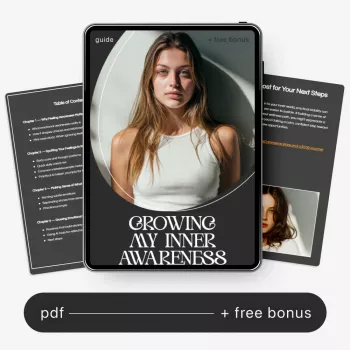
Growing My Inner Awareness – Emotional Awareness Guide & Self Reflection eBook (Digital Download) combines mindfulness-based check-ins with emotional intelligence exercises and structured, AI-assisted journaling support to make reflection feel doable—even on busy days.
What “inner awareness” looks like in everyday life
Inner awareness isn’t about being calm all the time. It’s about noticing what’s true for you—early enough to work with it. In practical terms, it often looks like:
- Noticing feelings early enough to respond rather than react
- Naming emotions with more precision than “good/bad/okay”
- Separating facts, interpretations, and triggers
- Tracking patterns: situations, thoughts, body cues, and needs
- Choosing coping tools that match the moment (calm, clarity, boundaries, repair)
Over time, that combination tends to reduce emotional “mystery.” You start recognizing signals in your body, the stories your mind tells under stress, and what you need in order to feel safe, respected, or connected.
What’s included in the Growing My Inner Awareness digital guide
This digital download is designed to be used flexibly: a quick check-in on a phone, a deeper session on a tablet, or a weekly review on a laptop. The structure supports consistency without requiring long journal sessions.
- A guided self-reflection structure to identify emotions, needs, and values
- Mindfulness-oriented check-ins to connect thoughts, body sensations, and mood
- Emotional intelligence exercises to improve self-regulation and empathy
- AI-assisted reflection prompts to deepen journaling when words feel hard to find
- Instant digital download for flexible use on phone, tablet, or desktop
Quick overview: how the guide supports a reflection practice
| Component | What it helps with | When to use it |
|---|---|---|
| Mindful check-ins | Spotting body signals tied to emotion | Morning, mid-day reset, before sleep |
| Emotion naming cues | Reducing overwhelm through clarity | When feelings feel “mixed” or confusing |
| Self-reflection prompts | Finding triggers, beliefs, and needs | After a difficult moment or conversation |
| Emotional intelligence exercises | Improving regulation and relationship repair | Weekly practice or after conflict |
| AI-assisted journaling prompts | Breaking through blank-page paralysis | When stuck, numb, or overthinking |
A simple routine that fits real life
A consistent micro-routine builds awareness faster than occasional long sessions. A practical approach is to keep it short, repeatable, and focused on the present moment:
- 2 minutes: pause and label the emotion and intensity (0–10)
- 3 minutes: note the trigger and the story the mind is telling
- 2 minutes: identify the need underneath (rest, respect, reassurance, autonomy, connection)
- 3 minutes: choose one supportive action (breath, walk, message, boundary, repair attempt)
- Optional: use AI-assisted prompts to expand insights without spiraling into rumination
If you like pairing reflection with a physical “cue” (something that tells your brain it’s time to slow down), a cozy layer can help make the routine feel more inviting. For a comfortable wind-down or morning check-in, consider Vans Women’s Pink Hooded Jacket or Women’s Beige Faux Fur Jacket—both easy grabs for a porch reset, quick walk, or journaling session.
Using AI-assisted prompts safely and thoughtfully
AI-assisted reflection can be useful when you feel blank, scattered, or overly analytical—but it works best with clear boundaries. Keep it grounded and practical:
- Treat responses as reflection starters, not “answers” about identity or diagnosis
- Keep the focus on present-moment experience: feelings, needs, options, and next steps
- Avoid sharing sensitive personal identifiers; keep journaling private and minimal
- If a prompt increases distress, switch to grounding: senses scan, breathing, or a short walk
- For persistent anxiety, depression, trauma symptoms, or self-harm thoughts, seek professional support
Mindfulness practices are widely used to support stress management and emotional balance. For additional background, see resources from the American Psychological Association, the NHS on coping with stress, and Harvard Health Publishing.
Who this guide is for (and when it helps most)
Structured reflection is especially helpful when emotions feel intense, confusing, or hard to communicate. This guide fits well for:
For people building a new routine, comfort and consistency matter. If your reflection time happens during a commute break or after errands, a dependable outfit staple like Levi’s Women’s Blue Plain Jeans can make it easier to take a quick reset walk and return feeling more regulated.
Getting started in 10 minutes
Product details and digital download notes
Find the full details here: Growing My Inner Awareness – Emotional Awareness Guide & Self Reflection eBook (Digital Download).
FAQ
How is this different from a regular journal?
It uses a structured reflection flow with emotion-labeling support and mindfulness check-ins, so you’re not staring at a blank page. The guided steps also make it easier to identify patterns over time and choose practical next actions instead of looping in the same thoughts.
Can this be used if emotions feel numb or confusing?
Yes—start with body sensations and a simple intensity rating (0–10), even if you can’t name an emotion yet. Keep sessions short and use gentle questions to uncover needs; if numbness persists or worsens, professional support can be helpful.
Is this a substitute for therapy?
No. It’s a self-guided reflection tool that can complement therapy or coaching, but it doesn’t diagnose or treat mental health conditions. If distress feels ongoing, severe, or unsafe, reach out to a licensed professional.
Recommended for you


Was this article helpful?
Yes
No








Leave a comment