-
Shop
- Adidas
- Advanced Technologies
- Apple Accessories
- Armani Fashion
- Arts, Crafts & Hobbies
- Beauty & Skincare
- Best-Sellers
- Calvin Klein Fashion
- Car Accessories
- Dating & Social Skills
- Drones
- Education & Learning
- Electronics
- Emotional Intelligence
- Family & Parenting
- Fashion
- Alexander McQueen Fashion
- Bags
- Bags & Wallets
- Balenciaga Fashion
- Belts
- Blazers
- Blouses & Shirts
- Bottega Veneta Fashion
- Bottoms
- Brunello Cucinelli Fashion
- Burberry Fashion
- Chanel Fashion
- Chloé Fashion
- Dior Fashion
- Dolce & Gabbana Fashion
- Dresses
- Etro Fashion
- Fendi Fashion
- Gucci Fashion
- Hats & Hair Accessories
- Hoodies & Sweatshirts
- Jacquemus Fashion
- Jewelry
- Jil Sander Fashion
- Jimmy Choo Fashion
- Kiton Fashion
- Luggage
- Luggage Bags
- Men's Fashion
- Miu Miu Fashion
- Off-White Fashion
- Outerwear
- Prada Fashion
- Rick Owens Fashion
- Saint Laurent Fashion
- Scarves
- Shoes
- Skirts
- Socks & Tights
- Sunglasses
- Sweaters & Cardigans
- The Row Fashion
- Tom Ford Fashion
- Tops & Shirts
- Trousers
- Valentino fashion
- Valentino Garavani Fashion
- Versace Fashion
- Vivienne Westwood fashion
- Watches
- Fashion Accessories
- Finance & Career
- Fitness & Movement
- Gadgets
- Gift Ideas
- Gifts
- Guess Fashion
- Health & Beauty
- Health & Wellness
- Home & Garden
- Home & Lifestyle
- Home Supplies
- Hormone & Women’s Health
- Kids & Babies
- Massagers
- Mindset
- Mindset & Personal Growth
- Nike Fashion
- Nutrition & Healthy Eating
- Patio, Lawn & Garden
- Personal Growth
- Pet Care
- Pet Supplies
- Pets
- Productivity
- Relationships & Social Confidence
- Samsung Accessories
- Self-Care & Mental Well-Being
- Sleep & Rest
- Sport
- Sport & Outdoors
- Style & Fashion
- Summer 2025 Fashion Collection
- Super Deals
- Tesla Accessories
- Tommy Hilfiger Fashion
- Travel
- Travel & Outdoors
- Video Games
- Wealth
Floor-to-Ceiling Cat Tree Tower: Safe Vertical Space
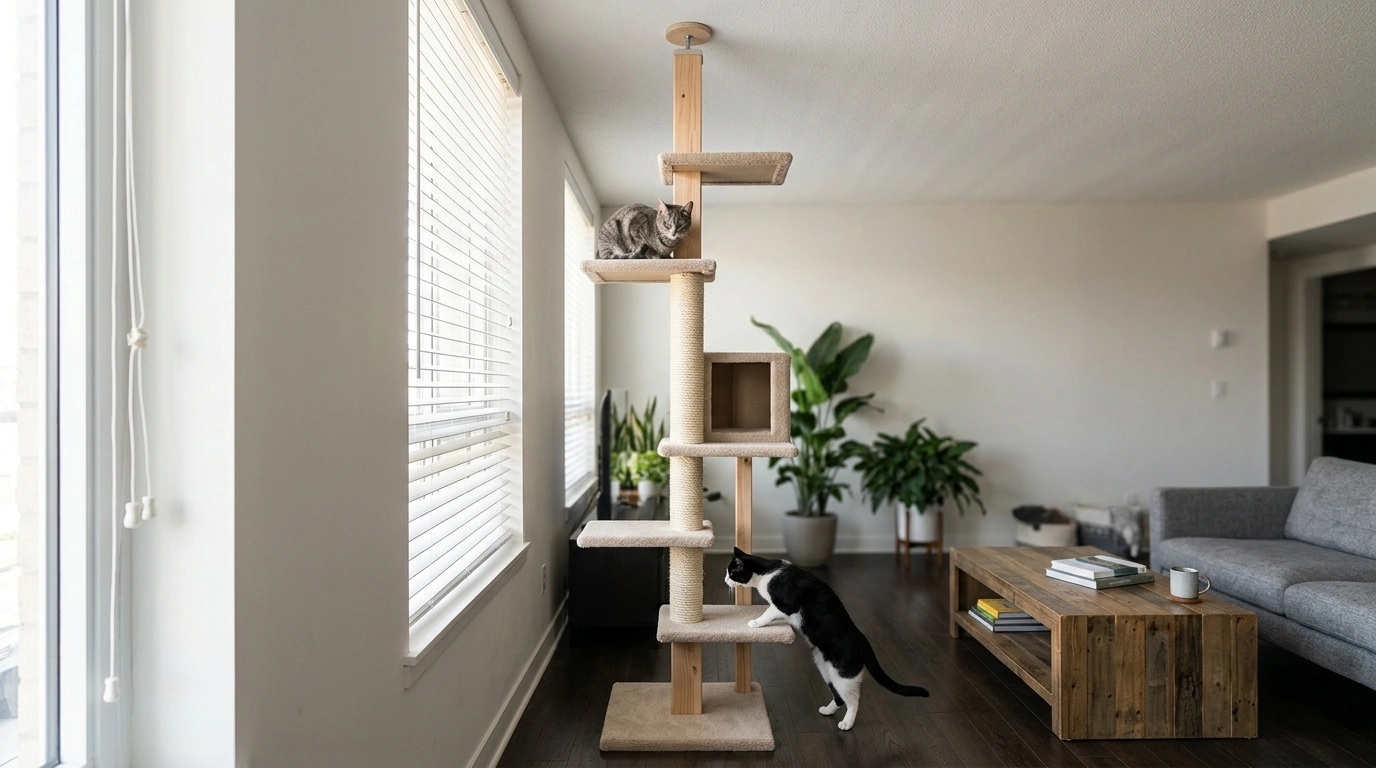
Adjustable Floor to Ceiling Cat Tree Tower: Big Vertical Fun in a Small Footprint
A floor-to-ceiling cat tree creates tall climbing space without using much floor area, making it a practical choice for apartments and busy living rooms. This adjustable tower style adds vertical routes for climbing, perching, scratching, and resting—while staying securely braced between the floor and ceiling when installed correctly. For many cats, that “up high” access supports natural behaviors like surveying the room, retreating for quiet time, and moving through the home with confidence.
Enrichment experts consistently point to climbing, hiding, scratching, and observing as core daily needs for indoor cats. Helpful references include International Cat Care (iCatCare), the ASPCA enrichment guidance, and general care resources from the AVMA.
What a floor-to-ceiling tower adds to a cat’s daily routine
- Vertical territory that supports climbing, jumping, and elevated resting spots
- A built-in scratching option that can redirect clawing away from furniture
- More usable space in small rooms compared with wide, multi-base cat trees
- A predictable “route” for cats that like to patrol and observe from above
- Helpful for multi-cat homes when set up to create more than one perch level
Many cats settle faster in a home when they have a clear “cat zone” that isn’t in the middle of foot traffic. A tall tower can become that dependable hub—especially when it includes multiple levels so cats can share space without being forced into close contact.
Sizing and placement: getting the height and location right
Before buying an adjustable tower, measure the floor-to-ceiling height at the exact spot where it will be installed (ceilings can vary across the same room). Then confirm the tower’s adjustment range so the top brace can lock in securely without maxing out the mechanism.
- Measure floor-to-ceiling height and confirm the tower’s adjustment range before purchase
- Choose a spot with stable flooring and a ceiling surface that can handle gentle bracing pressure (avoid weak ceiling tiles)
- Place near a window for viewing enrichment, but keep cords/blinds out of reach
- Leave enough side clearance so cats can jump on/off without hitting shelves or wall décor
- For energetic cats, position it to create a safe “jump line” to another sturdy perch (like a couch back) rather than a fragile surface
Quick fit check before setup
| Check | Why it matters | What to do |
|---|---|---|
| Ceiling height | Ensures the tower can brace securely | Measure floor-to-ceiling at the exact install spot |
| Ceiling surface | Prevents slipping or damage | Avoid soft tiles; use a solid surface when possible |
| Floor stability | Reduces wobble during climbing | Install on level flooring; avoid thick, squishy rugs |
| Traffic flow | Prevents collisions and stress | Keep clear of doors, tight hallways, and busy walk paths |
| Window/heat sources | Improves comfort and safety | Use window proximity for views; keep away from heaters |
Stability and safety essentials
Adjustable floor-to-ceiling designs feel “magic” when installed correctly and frustrating when they’re even slightly loose. The goal is firm, even bracing—snug enough to eliminate wobble, but not cranked so hard that it stresses the ceiling surface.
- Follow the manufacturer’s adjustment steps so the top brace is snug but not over-tightened
- Re-check tightness after the first few days as materials settle, then inspect monthly
- If cats are heavy jumpers, place the tower where a wall can limit lateral sway (without forcing it to rub the wall)
- Avoid adding dangling toys if a cat tends to wrap around strings; supervise play for kittens
- For senior cats, ensure at least one lower entry perch so climbing doesn’t require big leaps
If a cat launches onto the tower at full speed, stability comes down to three factors: a correct height adjustment, a level floor, and solid joints that stay tight over time. When in doubt, choose a calmer “landing” approach by placing the first reachable platform closer to where your cat naturally walks.
Materials and features to look for
Feature guide for different cat needs
| Cat profile | Useful features | Notes |
|---|---|---|
| Kittens | More intermediate platforms, stable posts, supervised toy attachments | Smaller gaps reduce risky jumps |
| Adult, active cats | Taller routes, multiple perches, sturdy bracing | Confirm stability for high-speed launches |
| Seniors | Lower entry points, grippy surfaces, softer padding | Reduce vertical distance between key steps |
| Multi-cat homes | More than one perch level, separate resting spots | Add spacing so cats can pass without conflict |
Setup tips for confident use (especially for cautious cats)
Cleaning and maintenance to extend lifespan
When an adjustable tower is a better choice than a standard base cat tree
In-stock picks
- Adjustable Floor to Ceiling Cat Tree Tower
- Vans Women’s Pink Hooded Jacket
- Women’s Beige Faux Fur Jacket
FAQ
Will a floor-to-ceiling cat tree damage the ceiling?
When installed correctly, it should brace firmly without excessive force. Use a solid ceiling surface (not weak ceiling tiles), apply any protective pads included, and re-check tightness after a few days as the materials settle.
Is an adjustable tower stable enough for larger cats?
It can be, as long as the height adjustment is correct and the hardware stays tight. Look for sturdy posts, well-fitted joints, stable platform design, and install it on level flooring to reduce sway during jumps.
Where is the best place to put a floor-to-ceiling cat tree?
A spot near a window can add daily enrichment, but keep blind cords out of reach and avoid heat sources. Choose stable flooring, stay out of door swings and tight walkways, and provide safe landing zones for jumping on and off—especially in multi-cat homes.
Recommended for you
Was this article helpful?
Yes
No







Leave a comment