-
Shop
- Adidas
- Advanced Technologies
- Apple Accessories
- Armani Fashion
- Arts, Crafts & Hobbies
- Beauty & Skincare
- Best-Sellers
- Calvin Klein Fashion
- Car Accessories
- Dating & Social Skills
- Drones
- Education & Learning
- Electronics
- Emotional Intelligence
- Family & Parenting
- Fashion
- Alexander McQueen Fashion
- Bags
- Bags & Wallets
- Balenciaga Fashion
- Belts
- Blazers
- Blouses & Shirts
- Bottega Veneta Fashion
- Bottoms
- Brunello Cucinelli Fashion
- Burberry Fashion
- Chanel Fashion
- Chloé Fashion
- Dior Fashion
- Dolce & Gabbana Fashion
- Dresses
- Etro Fashion
- Fendi Fashion
- Gucci Fashion
- Hats & Hair Accessories
- Hoodies & Sweatshirts
- Jacquemus Fashion
- Jewelry
- Jil Sander Fashion
- Jimmy Choo Fashion
- Kiton Fashion
- Luggage
- Luggage Bags
- Men's Fashion
- Miu Miu Fashion
- Off-White Fashion
- Outerwear
- Prada Fashion
- Rick Owens Fashion
- Saint Laurent Fashion
- Scarves
- Shoes
- Skirts
- Socks & Tights
- Sunglasses
- Sweaters & Cardigans
- The Row Fashion
- Tom Ford Fashion
- Tops & Shirts
- Trousers
- Valentino fashion
- Valentino Garavani Fashion
- Versace Fashion
- Vivienne Westwood fashion
- Watches
- Fashion Accessories
- Finance & Career
- Fitness & Movement
- Gadgets
- Gift Ideas
- Gifts
- Guess Fashion
- Health & Beauty
- Health & Wellness
- Home & Garden
- Home & Lifestyle
- Home Supplies
- Hormone & Women’s Health
- Kids & Babies
- Massagers
- Mindset
- Mindset & Personal Growth
- Nike Fashion
- Nutrition & Healthy Eating
- Patio, Lawn & Garden
- Personal Growth
- Pet Care
- Pet Supplies
- Pets
- Productivity
- Relationships & Social Confidence
- Samsung Accessories
- Self-Care & Mental Well-Being
- Sleep & Rest
- Sport
- Sport & Outdoors
- Style & Fashion
- Summer 2025 Fashion Collection
- Super Deals
- Tesla Accessories
- Tommy Hilfiger Fashion
- Travel
- Travel & Outdoors
- Video Games
- Wealth
Wooden Dino Park Stacking Toy for Montessori Play
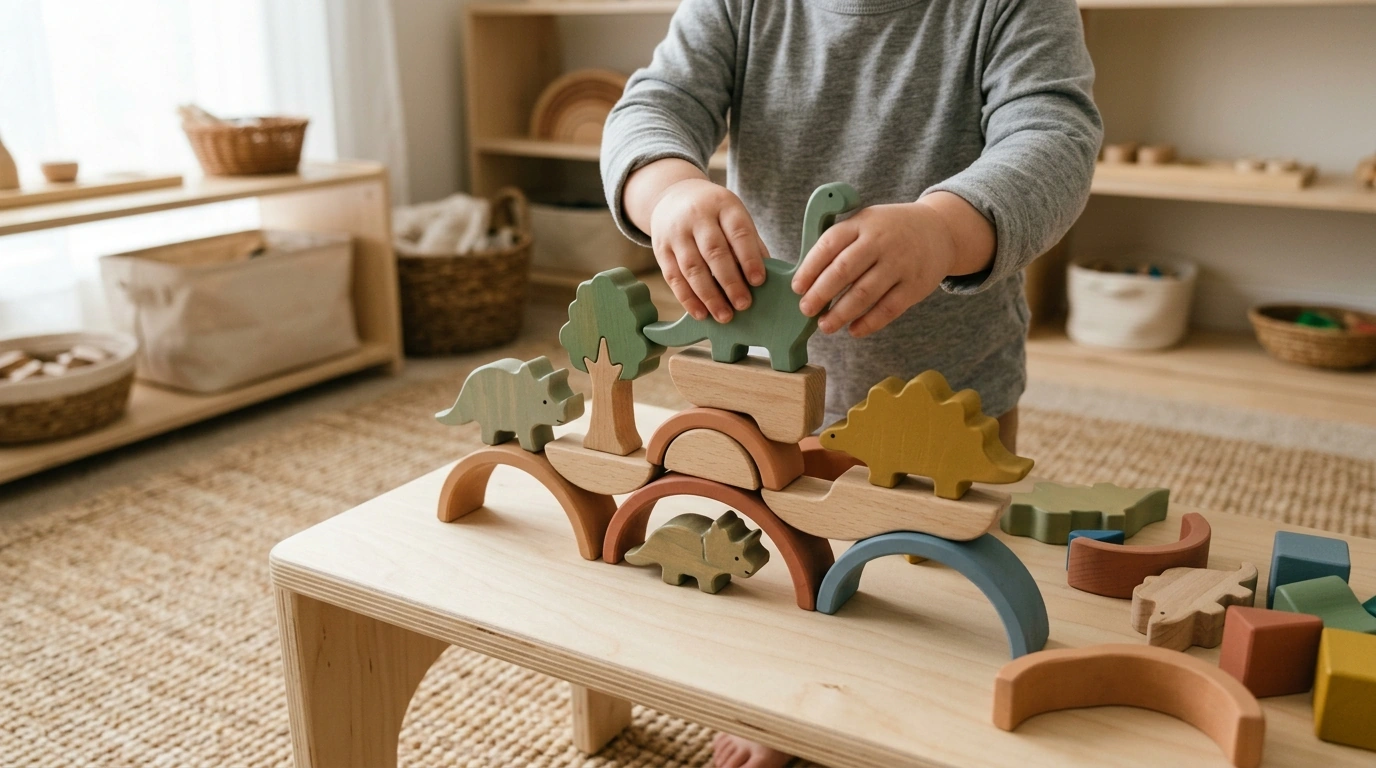
Wooden Montessori Dinosaur Park Stacking Educational Toy
A hands-on dinosaur “park” that blends open-ended play with skill-building: stacking, balancing, sorting, and imaginative storytelling. With wooden pieces sized for small hands, it supports calm, screen-free play while strengthening early learning foundations like fine-motor control, spatial reasoning, and early math language.
Whether playtime lasts five focused minutes or turns into a full afternoon “park tour,” this type of wooden stacking set invites kids to experiment, rebuild, and proudly show off their latest creation—no batteries required. For general toy safety guidance, the American Academy of Pediatrics offers a helpful overview here: Toy Safety.
What Makes This Dinosaur Park Toy Different
- Theme meets challenge: It combines a playful dinosaur park scene with real stacking and balancing puzzles that keep little hands busy.
- More than one “right” answer: Pieces can be arranged in multiple ways, encouraging child-led design instead of step-by-step instructions.
- Montessori-style learning: Tactile exploration, repetition, and self-correction (try, wobble, adjust, try again) are built into the experience. For a clear overview of Montessori principles, see the American Montessori Society’s introduction: Introduction to Montessori.
- Flexible for different play modes: Works for solo building, sibling teamwork, or caregiver-guided activities like naming colors, counting, and storytelling.
Skills Kids Practice While Playing
Stacking toys look simple, but they pack in a surprising amount of early learning. As kids build and rebuild their dinosaur park, they naturally practice:
- Fine-motor skills: grasping, pinching, rotating pieces, and placing them with control.
- Hand–eye coordination: aligning shapes, aiming for the “just right” spot, and balancing layers.
- Spatial reasoning: noticing size, orientation, stability, and what fits where.
- Early math concepts: counting pieces, comparing sizes (bigger/smaller), sorting by type or color, and creating patterns.
- Language and social skills: naming dinosaurs, describing actions (“It’s wobbling!”), turn-taking, and cooperative building.
- Executive function: planning a build, sticking with it after a fall, and focusing through multi-step play.
For a broader view of age-by-age developmental skills, the CDC’s milestones resource can be a useful reference: Important Milestones.
Ways to Play: From Simple Stacks to a Full Dinosaur Park
One of the best parts of a dinosaur stacking set is how easily you can “level it up” as your child grows. Try rotating prompts to keep play fresh while using the same pieces.
- Starter challenge: Stack by size from largest to smallest to explore stability and gravity.
- Balance game: Set a “no-fall” timer and adjust placement to keep the structure standing until the timer ends.
- Sorting station: Group pieces by color, dinosaur type, or shape before building—then build from each group.
- Pattern play: Alternate colors or piece types (A-B-A-B) and say the pattern out loud as you place each piece.
- Story builds: Create a park “route” and narrate where each dinosaur goes (habitat, snack stop, lookout point).
- Co-op play: One child builds the base while another adds details and “park rules” for imaginative role-play.
Quick Overview
This wooden dinosaur park stacking set is designed for repeated builds, resets, and creative scene-making—an easy go-to for quiet time, learning corners, or playdates. It also makes a gift-friendly pick for dinosaur-loving toddlers and preschoolers who enjoy hands-on puzzles and pretend play.
At-a-Glance Details
| Feature | Details |
|---|---|
| Product name | Wooden Montessori Dinosaur Park Stacking Educational Toy |
| Play style | Stacking, balancing, sorting, imaginative play |
| Material | Wood (painted/colored pieces may be included) |
| Best for | Toddlers and preschoolers (age suitability depends on piece size and supervision) |
| Ideal setting | Playroom, classroom, therapy room, quiet-time table activities |
| Availability | In stock |
Choosing the Right Age and Setup
- Toddlers: Start with fewer pieces at a time, focusing on simple stacking and naming colors or shapes. Short, successful builds can be more engaging than tall towers that collapse quickly.
- Preschoolers: Add challenges like building higher, sorting before stacking, or creating repeating patterns and “park zones.”
- If younger siblings are around: Keep smaller parts out of reach and use a designated play tray or mat to define the play area and simplify cleanup.
- Keep it feeling new: Rotate play prompts (stacking one week, sorting the next) instead of adding more toys to the shelf.
- Classroom-ready idea: Pair the set with dinosaur picture books and simple “build cards” labeled easy/medium/hard for group centers.
Safety, Care, and What to Look For in Wooden Toys
- Follow age guidance: Check the recommended age range and supervise closely if a child still mouths toys.
- Check the finish and build: Look for smooth edges, sturdy construction, and finishes intended for children’s products.
- Inspect regularly: Watch for chips, cracks, or loosened parts, and remove damaged pieces promptly.
- Cleaning: Wipe with a slightly damp cloth and dry fully; avoid soaking wood to reduce warping.
- Storage: Keep pieces in a dry container to protect paint/finish and reduce piece loss between play sessions.
Shop In-Stock Picks
- Wooden Montessori Dinosaur Park Stacking Educational Toy ($85.49)
- Vans Women’s Pink Hooded Jacket ($172.85)
- Levi’s Women’s Blue Plain Jeans ($148.55)
FAQ
What age is a wooden stacking toy like this best for?
This style of wooden stacking set is typically a great match for toddlers through preschoolers, with the exact fit depending on piece size and whether a child still mouths toys. For younger children, close supervision helps keep play safe and frustration low.
How does stacking play support learning?
Stacking builds fine-motor control and hand–eye coordination as kids grasp, rotate, and place pieces precisely. It also supports spatial reasoning and early math language (counting, bigger/smaller, patterns) while encouraging persistence through trial-and-error.
How should wooden toys be cleaned and stored?
Wipe wooden pieces with a slightly damp cloth, then dry completely; avoid soaking to help prevent warping. Store in a dry bin or bag, and periodically check pieces for chips or cracks so play stays smooth and safe.
Recommended for you

Was this article helpful?
Yes
No







Leave a comment